Standing out in a crowd is becoming harder than ever. With thousands of products and services competing for attention, businesses must think differently to catch a consumer’s eye. This is where the concept of the “Purple Cow” comes in—a term coined by marketing expert Seth Godin. But what exactly does this idea tell us about how consumers think and make decisions? Let’s explore this further.
Understanding the Purple Cow
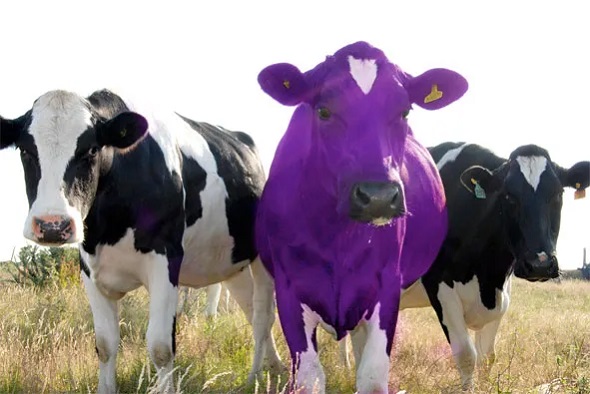
Imagine driving past a field full of cows. For the first few minutes, you might take notice. But eventually, all the cows start to look the same—black, white, or brown. Now imagine if one of them was bright purple. That would instantly grab your attention.
This is the foundation of the Purple Cow meaning. In a saturated market, ordinary offerings fade into the background. People notice what breaks the pattern. It isn’t about being loud or flashy for no reason—it’s about being different in a way that matters. The psychology behind this is rooted in how our brains are wired to notice contrast and novelty.
Consumer Attention is Limited
Every day, people are bombarded with ads, notifications, and offers. In this constant stream, most messages get ignored. Our brains filter out what seems repetitive or irrelevant. This is a survival mechanism. We pay attention to what seems new or surprising because it might be important.
This behavior explains why some products succeed with minimal advertising—because they are instantly noticeable. The Purple Cow isn’t about gimmicks. It’s about being meaningful and distinct enough for the brain to say, “This is worth remembering.”
Trust Follows Attention
Getting attention is the first step, but it doesn’t stop there. Once consumers notice something different, they evaluate it. Is this product reliable? Does it deliver on its promises? In short, the initial interest must be backed up by value.
That’s why companies that focus only on standing out often fail to keep customers coming back. The key takeaway is that differentiation grabs attention, but trust retains loyalty. Consumer psychology shows us that people don’t just buy things because they’re different—they buy them because those differences matter to them.
Examples in Action
Look at the rise of niche brands in recent years. Whether it’s a snack company that offers rare ingredients or a clothing label with unusual cuts and textures, these businesses succeed because they don’t blend in. They understand their audience well and give them something they haven’t seen before in that category.
Take the example of electric vehicles. When Tesla entered the automotive industry, it didn’t just market another car—it positioned itself as something entirely different. The technology, the style, and the direct-to-consumer model all acted as “purple cow” elements that made people stop and look twice.
Why Familiar Doesn’t Always Win
Many companies believe that familiarity creates trust. While there’s some truth to that, overuse of familiar patterns can make a brand invisible. If ten products on the shelf look the same, the buyer often reaches for the one that feels a little different—even if they’ve never tried it before.
This behavior ties into how humans explore. We are naturally curious. If a new product sparks that curiosity, even slightly, it has a better chance of being chosen.
The Role of Word of Mouth
One of the most powerful outcomes of standing out is conversation. People talk about things that are worth mentioning. The Purple Cow meaning highlights this clearly. When someone sees something that breaks expectations in a good way, they’re likely to tell others.
Consumer psychology supports this. When we share discoveries, we reinforce our identity. We enjoy being the first to share something interesting. So when a product is different in a useful or entertaining way, people become voluntary promoters of the brand.
Don’t Force It
Trying to be different just for the sake of it can backfire. Consumers are quick to spot inauthenticity. If a brand tries too hard to appear bold or quirky without having a solid product behind it, it often ends up being ignored or even mocked.
Instead, the better approach is to identify what genuinely makes the product stand apart. Is it a new approach? Better performance? Simpler use? Those are the qualities that make a “purple cow” effective.
Final Thoughts
The Purple Cow meaning shows us that being average is no longer safe. Blending in might help you avoid criticism, but it won’t get you noticed. In a market where consumers are selective with their time and attention, the only way to break through is to offer something that earns a second look.
That doesn’t mean chasing trends or putting out flashy packaging. It means understanding what your audience values—and delivering that in a way they haven’t experienced before.
Whether you’re launching a new product or evaluating your brand, ask yourself: Would someone remember this after five minutes? If not, it might be time to find your own version of the Purple Cow.
 Structured Way
Leave a comment